I just need five minutes of peace — How my commute playlist became my daily reset button
We’ve all been there: stuck in traffic, packed into a crowded train, or rushing between meetings with no time to breathe. I used to dread my daily commute—until I realized it wasn’t the travel that was draining me, but the noise, the rush, the mental clutter. Then I started using music streaming differently. Not just as background noise, but as a tool—a daily ritual that helps me transition, focus, and recharge. What if the thing you already do every day could actually work *for* you, not against you? That simple shift changed everything. It wasn’t about escaping life—it was about showing up for it, calmer, clearer, and more like myself.
The Commute That Changed Everything
Three years ago, I hit a wall. I was juggling work deadlines, school pickups, and endless to-do lists that never seemed to shrink. Every morning, I’d pull out of the driveway already feeling behind. The radio blared with traffic updates and loud ads, and by the time I reached my office, my shoulders were tight, my mind was racing, and I hadn’t even had my first meeting. The same thing happened in reverse at night—driving home after a long day, I’d feel emotionally drained, like I’d given everything to everyone else and had nothing left for me.
One rainy Tuesday, my usual station cut out. Frustrated, I opened a music app I hadn’t used in months. I didn’t know what I wanted—just something to fill the silence without adding more noise. I searched for ‘calm piano’ and clicked the first playlist that popped up. Within minutes, something shifted. The music wasn’t distracting; it was grounding. Instead of reacting to every brake light and honk, I found myself breathing deeper, my hands relaxed on the wheel. When I parked, I sat for a moment, not rushing to get out. I felt… reset.
That moment sparked a realization: my commute didn’t have to be a battle. It could be a bridge—from home to work, from work to home, from stress to stillness. I wasn’t just moving through space; I was transitioning between roles, mindsets, and emotional states. And for the first time, I had a tool that helped me do it with intention. That playlist didn’t solve all my problems, but it gave me back a sense of control. It became my daily reset button, and I didn’t even need to press it—just press play.
From Noise to Intention: Rethinking the Role of Music
For years, I treated music like background filler—something to drown out the world while I multitasked. But that rainy morning showed me something different: music could be more than noise. It could be a companion, a guide, even a form of quiet rebellion against the constant demands on my attention. The truth is, we don’t just hear music—we *feel* it. And when used with purpose, it can shape our inner state as much as our outer environment.
Streaming platforms made this shift possible. With just a few taps, I could access thousands of songs curated not just by genre, but by mood, tempo, and intention. I didn’t need to know music theory or be a playlist expert. I just needed to ask myself: how do I want to feel? Calm? Focused? Energized? Comforted? Once I started thinking of playlists as emotional tools, everything changed. Instead of letting algorithms decide what I heard, I began crafting my own soundtracks for different parts of my day.
For example, I created a morning playlist with soft vocals and gentle rhythms—nothing too upbeat, nothing with jarring lyrics. It wasn’t about getting pumped up; it was about easing into the day with presence. At night, I switched to something slower, with warm tones and minimal vocals, helping me transition from ‘doing’ mode to ‘being’ mode. Over time, these choices became second nature. Music stopped being passive and became active—a small, daily act of self-awareness. And the best part? It didn’t require extra time. I was already commuting. I was already listening. I just started listening *on purpose*.
Your Headphones Are a Boundary
Let’s be honest—public spaces can be overwhelming. Trains, buses, parking lots, even office hallways—they’re full of noise, both literal and emotional. Someone’s phone rings too loud. A stranger argues on a call. The world feels loud, and sometimes, invasive. Before I started using music intentionally, I felt exposed during my commute, like I had no space to just *be* without performing or reacting.
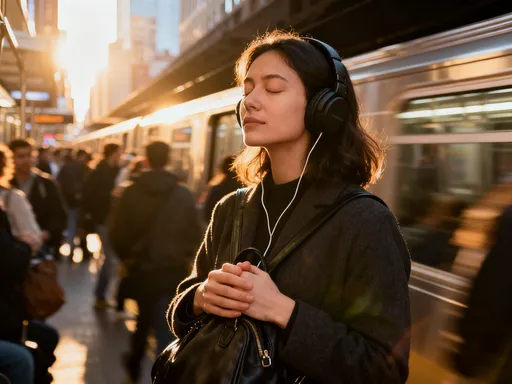
Then I realized: my headphones were more than a device. They were a boundary. The moment I put them on, something subtle but powerful shifted. I wasn’t just listening to music—I was signaling to the world, without saying a word, that I needed space. It wasn’t rude. It wasn’t antisocial. It was self-protection. In crowded spaces, that small act gave me back a sense of privacy, a bubble of calm in the chaos.
Psychologists call this ‘attentional control’—the ability to direct our focus where we want it, instead of letting it be pulled in every direction. Headphones help with that. They create a sensory filter, reducing visual and auditory distractions so we can retreat inward. For me, this became especially important during high-stress seasons—back-to-school, holiday planning, family health concerns. When everything felt like too much, my commute became the one place I could press pause. The music wasn’t an escape; it was a return—to myself, to my breath, to a sense of balance. And over time, that boundary didn’t just protect my commute. It taught me how to protect my energy in other parts of life too.
Building Micro-Routines with Playlists
One of the most powerful things I’ve learned is that self-care doesn’t have to be big. It doesn’t require spa days or weekend retreats (though those are nice when possible). Real, lasting care often lives in the small, repeatable moments—the micro-routines that add up over time. And playlists? They’re the perfect vehicle for that.
I started by identifying the emotional shifts I needed each day. Mornings were about clarity, not caffeine. Evenings were about release, not rushing into the next task. Midday was about focus, not frantic energy. Once I named those needs, I could match them with music. I didn’t overthink it. I just asked: what kind of soundtrack supports this moment?
My ‘Morning Clarity’ playlist includes acoustic guitar, light piano, and artists with soothing voices—nothing with heavy beats or intense lyrics. It’s not about motivation; it’s about presence. I play it during my first 15 minutes of the drive, before the news comes on, before I check emails. It sets the tone. Then there’s ‘Post-Work Unwind’—slower songs, often instrumental, with a steady, calming rhythm. This one helps me shed the weight of the day before walking into my home. I don’t want to bring work stress to my family. This playlist helps me leave it in the car.
And when I need focus—say, during a long work block or a complicated project—I turn to ‘Focus Flow.’ It’s mostly ambient or lo-fi beats, just enough rhythm to keep my brain engaged but not distracted. No lyrics, no surprises. It’s like mental white noise, but warmer, more human. The beauty of these playlists is that they become automatic. I don’t have to decide how to feel. I just press play, and the music guides me. Over time, my brain began to associate certain sounds with certain states. Now, when I hear the first notes of ‘Morning Clarity,’ I naturally slow my breathing. It’s like muscle memory for the mind.
The Science of Sound and Transition
You don’t need a neuroscience degree to know that music affects your mood. But understanding a little of how it works can make the practice feel even more powerful. Our brains are wired to respond to rhythm, melody, and harmony in ways that influence our emotions, focus, and even our body chemistry.
One key concept is called ‘entrainment.’ It means that our internal rhythms—like heart rate, breathing, and brainwaves—can sync with external rhythms, like music. When you listen to a slow, steady beat, your body naturally begins to match it. Your breath slows. Your muscles relax. Your mind quiets. That’s why a calming playlist can feel so grounding—it’s not just pleasant; it’s physiologically regulating.
Then there’s dopamine, the brain chemical linked to pleasure and reward. Listening to music we enjoy triggers dopamine release, which is why we feel uplifted or comforted by certain songs. But it’s not just about happy tunes. Even sad music can be healing because it helps us process emotions, not avoid them. The key is intention. When we choose music that supports our current need—calm, focus, energy—we’re not just passively consuming sound. We’re actively shaping our inner state.
Another important factor is emotional regulation. Life throws curveballs. We can’t control everything, but we can influence how we respond. Music gives us a tool to shift gears emotionally. A tense moment can be softened with a gentle melody. A sluggish afternoon can be lifted with a brighter rhythm. It’s not magic—it’s biology, working in our favor. And the more we use music this way, the more effective it becomes. Our brains learn the pattern: this sound = this feeling. Over time, the transition becomes smoother, faster, and more reliable.
Making It Stick: Integrating Music into Daily Flow
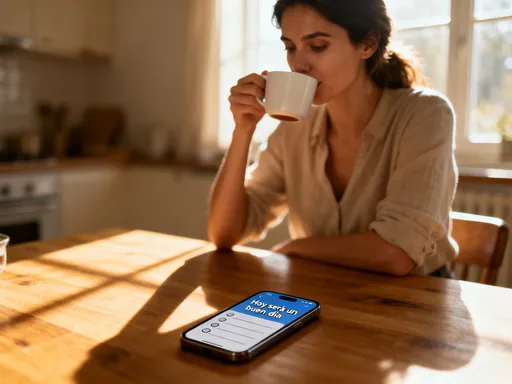
Like any good habit, this one took a little practice. At first, I’d forget to start the playlist, or I’d get distracted by notifications. But I kept coming back to it because I could feel the difference. The real shift happened when I stopped treating it as an ‘extra’ thing and started seeing it as part of my routine—like brushing my teeth or making my coffee.
One trick that helped was syncing the playlist with a trigger. I decided that as soon as I started the car, I’d play my morning playlist. No decisions, no delays. I also turned off autoplay for podcasts and news shows during that time. This wasn’t about cutting out information forever—it was about protecting the first few minutes of my commute for transition, not input. Later, I explored app features like scheduled play and ‘do not disturb’ modes, so my phone wouldn’t interrupt the flow.
Another game-changer was pairing music with breathing. I started with just two minutes: inhale for four counts, exhale for six, in sync with the music’s rhythm. It didn’t take long, but it deepened the effect. The music held my attention, and the breathing anchored my body. Together, they created a mini mindfulness practice that fit into my existing schedule. I didn’t need a meditation cushion or a quiet room—just my car and my headphones.
For evenings, I created a similar ritual. As soon as I pulled into the driveway, I’d let the ‘Post-Work Unwind’ playlist play for five minutes before going inside. That short buffer helped me shift from work mode to home mode. I wasn’t physically absent, but mentally, I was arriving—more present, more patient, more available. My family noticed. ‘You seem calmer,’ my daughter said once. ‘Did something change?’ I smiled. ‘Just my playlist,’ I said. But really, it was more than that.
More Than a Playlist—It’s Self-Care Infrastructure
Looking back, I realize this wasn’t just about music. It was about reclaiming small pockets of time and turning them into moments of care. In a world that glorifies busyness, where ‘I’m so busy’ is worn like a badge, this simple practice became an act of quiet resistance. I wasn’t adding more to my plate. I was honoring what was already there.
Self-care isn’t always about grand gestures. It’s often the tiny, consistent choices that make the biggest difference. A five-minute breathing break. A soothing song. A decision to protect your energy. These aren’t luxuries—they’re necessities. And when supported by technology, they become sustainable. My playlist didn’t cost extra. It didn’t require special skills. It just required attention—mine.
Over time, the benefits rippled outward. I became more focused at work, not because I worked harder, but because I started my day with clarity. I became more patient at home, not because my kids were quieter, but because I arrived with a calmer mind. I even started sleeping better, because my nervous system wasn’t running on high alert all evening. The music didn’t fix everything, but it created space—for breath, for reflection, for peace.
Now, when I hear someone say, ‘I just need five minutes of peace,’ I think of my commute. I think of that rainy morning, the piano notes filling the silence, and the quiet shift inside me. I think of how something as simple as a playlist—something most of us already use—can become a lifeline. Technology often gets framed as a distraction, as something that pulls us away from ourselves. But it doesn’t have to be that way. When used with intention, it can bring us back. Back to our breath. Back to our rhythm. Back to who we are beneath the noise.
So if you’re feeling stretched thin, if your days blur together, if you’re searching for a way to feel more like yourself—start small. Look at the moments you already have. Your commute. Your walk to the mailbox. Your coffee break. What if, in those spaces, you could build a ritual that supports you? What if the technology you already own could help you reset, recharge, and return—to your day, your family, your life—with a little more ease?
You don’t need a new app or a fancy gadget. You just need to listen—on purpose. Press play. Breathe. And let the music carry you home, even when you’re already there.