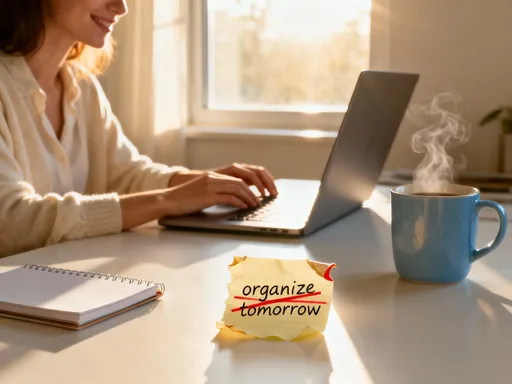
I’ll start my online course tomorrow — How my morning routine finally made it happen
We’ve all said it: “I’ll start that online course tomorrow.” But tomorrow turns into next week, then never. I was stuck too—until I stopped relying on willpower and started using small, smart tech habits each morning. No more excuses. Just progress. What changed? A few simple tweaks that aligned my day with my goals, proving that real growth doesn’t require grand gestures—just the right rhythm. It wasn’t about waking up at 5 a.m. or becoming a productivity robot. It was about making learning feel natural, doable, and even enjoyable—something that fit into my life instead of fighting against it. And honestly? The biggest shift came not from a new course or a fancy app, but from how I began my mornings.
The Broken Promise of "Tomorrow"
How many times have you clicked “Enroll Now” on an online course, heart full of hope? Maybe it was a photography class, a language course, or a skill to grow your side hustle. You imagined yourself months from now—more confident, more capable, maybe even doing something new. But then life happened. The kids needed help with homework. The laundry piled up. Work got busy. And that course tab? Still open in your browser, untouched for weeks.
I know that feeling all too well. I signed up for a digital illustration course last year, full of excitement. I even bought a tablet! But after the first two lessons, I kept telling myself, “I’ll do it tomorrow.” Tomorrow became next weekend. Next weekend became “when things calm down.” But things never really calm down, do they? The truth is, most of us don’t fail because we lack motivation. We fail because we don’t have a system. We’re counting on willpower to carry us through, but willpower is like a battery—it drains fast, especially when we’re tired, stressed, or overwhelmed.
And mornings? They’re usually the worst time to rely on willpower. You wake up groggy, your brain is still foggy, and the first thing you do is check your phone. Suddenly, you’ve spent 20 minutes scrolling through news, messages, and memes. By the time you get out of bed, you’re already behind. That course? It feels like one more thing on a never-ending to-do list. But what if we didn’t have to rely on willpower at all? What if we could design our mornings so that learning wasn’t a chore, but a natural part of the day?
Why Mornings Hold the Key to Learning
There’s something special about the first hour of the day. If you’ve ever sat with a warm cup of tea, watched the sun rise, and felt a quiet sense of possibility, you know what I mean. Your mind isn’t cluttered yet. The noise of the world hasn’t kicked in. This is when your brain is most alert, most open to new ideas. Scientists call this your peak cognitive window—the time when your focus, memory, and decision-making are at their best.
Think about it: when was the last time you tried to learn something new after a long day of work, cooking dinner, helping the kids, and managing a hundred little tasks? You were probably exhausted. Your brain was running on fumes. It’s no wonder you couldn’t concentrate. But in the morning, even if you’re not a “morning person,” your mental energy is naturally higher. You haven’t made dozens of decisions yet. You haven’t dealt with stress or distractions. That makes it the perfect time to learn—even if it’s just for a few minutes.
And here’s the beautiful thing: starting small actually works. You don’t need to commit to an hour of study every morning. Just 10 to 15 minutes of focused learning can create momentum. It’s like pushing a ball up a hill—the hardest part is getting it moving. But once it starts rolling, it keeps going. When you begin your day with learning, you send a message to your brain: “This matters.” And that message shapes your whole day. You feel more capable. More in control. More like the person you want to become.
Waking Up to a Learning-Friendly Routine
So how do you actually make this happen? It starts the moment you wake up. And no, you don’t need to throw away your alarm clock and start meditating on a mountaintop. But you can make one small change that makes a big difference: how you wake up.
For years, I used a loud, jarring alarm. You know the one—the kind that makes your heart race and your body tense. Then I’d lie in bed, groggy and annoyed, scrolling through my phone before I even got up. By the time I stood up, I already felt behind. But then I tried something different: a sunrise-simulating smart light. It starts glowing softly 30 minutes before my wake-up time, mimicking the natural rise of the sun. It doesn’t yank me out of sleep. It eases me into the day. And when the actual alarm goes off, it’s gentle—a soft chime, not a siren.
That small change made my mornings feel calmer. And once I was awake, I had a choice: grab my phone or open my tablet for my course. So I made it easier to choose the course. I put my tablet on my nightstand, fully charged, with the course app already open. No logging in. No searching. Just one tap to start. I also set a short audio cue—a peaceful piano melody—that plays right after the alarm. It’s like a signal to my brain: “This is learning time.”
These aren’t huge changes. But together, they create a rhythm. I’m not fighting against my instincts. I’m working with them. And that makes all the difference. The goal isn’t to be perfect. It’s to make the right choice the easiest one.
Choosing the Right Online Course Experience
Let’s be honest: not all online courses are created equal. Some are designed for binge-watching on weekends. Others expect you to spend hours reading dense text or watching long lectures. And if you’re trying to fit learning into a busy morning, that just doesn’t work.
What you need is a course that respects your time. Look for platforms that offer short, focused lessons—five to ten minutes long. These are perfect for mornings. You can finish one before your coffee gets cold. The best ones break down complex topics into small, digestible pieces. Instead of saying, “Learn Photoshop in 30 days,” they say, “Today, let’s adjust brightness in three easy steps.” That kind of pacing makes learning feel manageable, not overwhelming.
Another key feature? Progress tracking. There’s something deeply satisfying about seeing a little checkmark appear or watching a progress bar fill up. It’s proof that you’re moving forward. And when life gets chaotic, that visual reminder can keep you going. I also look for courses with mobile access and offline downloads. That way, if I’m on the go—waiting at the school pickup line or sitting in a doctor’s office—I can still do a quick lesson without needing Wi-Fi.
And don’t underestimate the power of “one-tap resume.” If the course remembers exactly where you left off and opens right to that lesson, you’re more likely to keep going. Friction kills motivation. The smoother the experience, the more likely you are to stick with it. Before committing, I always try a free lesson or two. Does it feel clear? Engaging? Do I come away feeling like I learned something real? If yes, I know it’s a good fit.
Syncing Tech to Your Natural Flow
Here’s a secret: I don’t rely on memory to remember my learning time. I rely on automation. And it’s not complicated. I simply use tools I already have—my phone, my calendar, my smart speaker—to create gentle reminders and remove barriers.
Every night, I schedule a calendar alert for 7:15 a.m. titled “Learning Time.” It’s not pushy. It’s just there, like a quiet nudge. I also created a home screen shortcut to my course app. It’s the first thing I see when I unlock my phone. No digging through folders. No searching. One tap, and I’m in.
I also use “Do Not Disturb” mode during my morning session. I turn off notifications from social media, email, and messaging apps. This isn’t about being unavailable—it’s about protecting my focus. I tell myself, “The world can wait 15 minutes.” And you know what? It always does.
Another trick: I preload the next lesson the night before. That way, when I sit down in the morning, everything is ready. No loading screens. No waiting. Just learning. I even set up a playlist of soft background music that starts automatically. It’s not a big production, but it creates a little ritual—a signal to my brain that this time is special.
These small tech habits don’t take much effort, but they make a huge difference. They turn intention into action. They make consistency possible, even on busy or tired days. And over time, they build a habit so strong that skipping it feels wrong—like forgetting to brush your teeth.
When Life Interrupts—And How to Stay on Track
Of course, not every morning goes as planned. Sometimes the kids wake up early. Sometimes the dog needs to go out. Sometimes you just don’t feel like it. And that’s okay. Perfection isn’t the goal. Consistency is.
When life interrupts, I have a backup plan: the mini-session. If I can’t do 15 minutes, I do five. If I can’t watch a lesson, I listen to the audio version while making breakfast. If I’m too tired to focus, I open the app just to check my progress. Just showing up—even for a moment—keeps the habit alive.
I also follow the two-day rule: I never let myself skip two mornings in a row. One day off? Fine. Life happens. But if I miss Monday, Tuesday is non-negotiable. This keeps me from falling into the “I’ll start again tomorrow” trap. And if I do miss a few days? I don’t beat myself up. I just open the app and begin again. No guilt. No drama. Just progress.
Another trick I use is voice notes. If I’m driving or walking and can’t watch a lesson, I record a quick thought about what I’ve learned or what I want to explore next. It keeps my mind engaged, even when I can’t be at my tablet. Then, when I sit down to learn again, I play back the note and jump right in. It’s a small way to stay connected to my goal, even when life gets busy.
Building a Life That Learns, Not Just Tries
After six months of this morning rhythm, something shifted. It wasn’t just that I finished my illustration course. It was how I felt about myself. I felt more capable. More intentional. More like I was growing, not just surviving. That quiet 15 minutes each morning became more than a learning session—it became a form of self-care.
Learning stopped being something I “should” do and became something I *wanted* to do. It wasn’t about proving anything to anyone. It was about showing up for myself. And that changed everything. I started applying what I learned—adding little illustrations to my journal, designing simple cards for friends, even helping my daughter with her art project. The skills became part of my life, not just something I studied.
And here’s the thing: you don’t need a big transformation to start. You just need a small, consistent rhythm. You don’t have to become an expert. You don’t have to post about it on social media. You just have to begin—gently, kindly, consistently. Let your mornings be a quiet space where you grow at your own pace.
So if you’ve been saying, “I’ll start tomorrow,” what if tomorrow was today? Not with a grand plan, but with one small step. Open the app. Watch one lesson. Let your smart light wake you gently. Make it easy. Make it kind. Make it yours. Because real growth isn’t loud. It’s quiet. It’s consistent. And it starts with how you begin your day.